







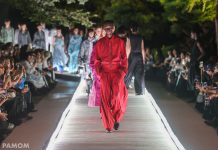

On April 14, tiit tokyo presented its Autumn/Winter 2026 collection at WITH HARAJUKU HALL, staging a runway that stepped away from the label’s usual sense of balance and moved toward something more intentionally unstable.
Titled “more.”, the collection was developed by designers Sho Iwata and Hiroshi Takizawa. The starting point drew from the 1969 film More, set in Ibiza, with the show built around tension—between control and excess, refinement and collapse.
The runway featured 24 looks across menswear and womenswear, presented in a stripped-back format inside the Harajuku venue. The setting remained minimal, placing full emphasis on the garments and their construction.
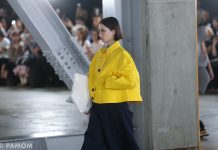
Visually, the collection expanded beyond the brand’s typical neutral palette. While beige, grey, and off-white remained present, they were interrupted by sharper color accents—blue, red, and orange—applied in a way that felt intermittent rather than dominant.
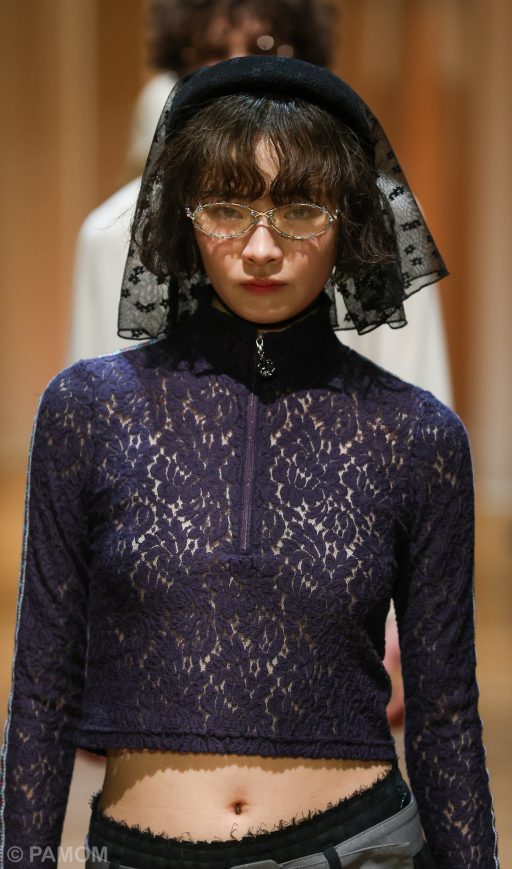
Construction carried the collection. Jackets embedded with pearls were deliberately wrinkled, resisting any sense of polish. Skirts and wide trousers were left with raw, unfinished hems. A recurring horse motif appeared in faded prints, giving certain pieces a worn, almost degraded surface.
Layering introduced imbalance. Denim trousers were paired with check skirts, patterned suits were worn under flight jackets, and combinations often disrupted coordination instead of reinforcing it. The styling avoided symmetry, leaning into friction between pieces.
Material direction also broadened. Alongside standard fabrication, the collection incorporated vintage elements, remade garments, and reworked past pieces, bringing different timelines into a single lineup without attempting to fully reconcile them.
Silhouettes themselves remained relatively consistent—coats, skirts, and trousers followed familiar proportions—but their treatment altered the overall impression. The garments did not rely on volume or exaggeration, but on surface and construction to shift their impact.
The show moved at a steady pace without theatrical cues or transitions. There were no defined “highlight” looks; instead, the collection built through repetition and gradual variation.
Rather than refining its existing language, tiit tokyo used this season to interrupt it. The result was a collection that stayed structurally controlled, while introducing visible tension within the clothes themselves.
To see more images, please visit: https://www.purpobandit.com/post/tiit-tokyo-autumn-winter-2026-runway-at-with-harajuku-hall

